
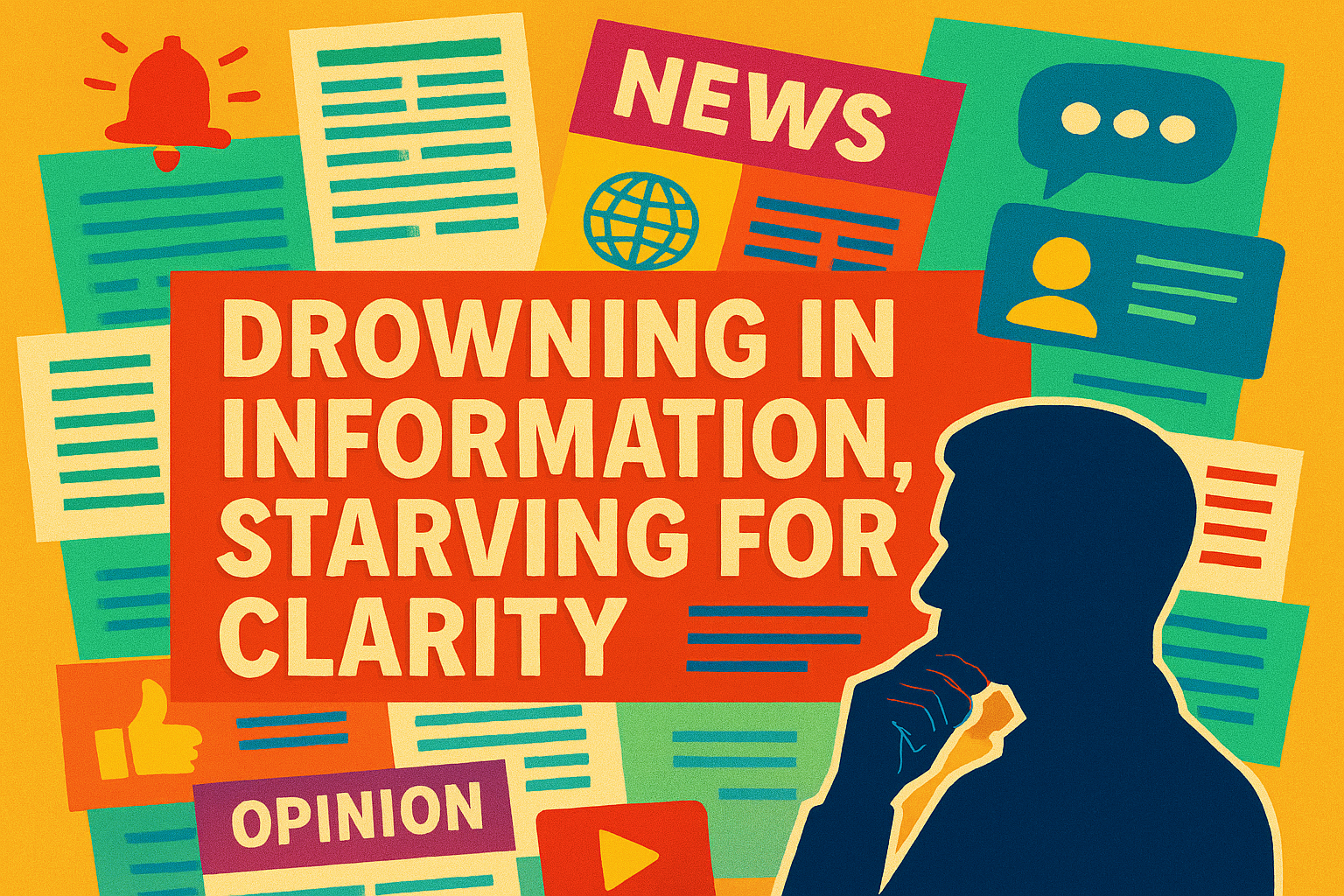
In today’s hyper-connected world, we are drowning in information yet starving for clarity. Every minute brings a flood of headlines, opinions, and “must-know” facts. But when speed and emotional impact overshadow accuracy and thoughtful analysis, even the sharpest professionals can fall into the trap of reactive thinking. Markets can swing wildly not because of fundamental change but because a single tweet or trending post ignites mass sentiment. In business, decisions made in this climate risk being dangerously short-sighted.
The real danger lies in our growing preference for conformity over creativity. Many teams unintentionally create echo chambers where the safest move is to agree rather than to question. It certainly feels comfortable but it can be costly. Consider the infamous “New Coke” debacle where research suggested customers were enthusiastic, yet dissenting voices warning about brand loyalty were ignored. The result? A product failure that could have been avoided. When “everyone” is nodding, no one is truly thinking!
One antidote to groupthink is to deliberately create space for dissent. Leaders who actively invite alternative viewpoints often uncover blind spots before they turn into expensive mistakes. Picture a retail chain planning aggressive store expansions. A cautious finance manager’s warning about cash flow might seem inconvenient, but listening could prevent a future crisis. Assigning a “devil’s advocate” in meetings can transform polite consensus into robust analysis.
Equally important is intellectual humility—the ability to say, “I might be wrong.” This isn’t a weakness. Admitting that even the best leaders can be wrong makes leadership more relatable and decision-making more adaptable. A tech CEO who acknowledges uncertainty about a market shift sends a clear signal that adaptability matters more than ego. This mindset is what allows start-ups to pivot quickly when initial strategies fail. Without humility, organizations risk doubling down on flawed strategies out of pride, not logic.
Another pillar of strong decision-making is media literacy. In an era where misinformation spreads faster than truth, professionals must be able to verify sources and cross-check claims. Imagine a marketing team basing a major campaign on a statistic only to discover it’s outdated or misinterpreted. The result? Wasted budget and damaged credibility. Training teams to spot unreliable data is no longer optional but a competitive necessity.
Finally, critical thinking is a skill that must be nurtured, not assumed. Workshops on cognitive bias, problem framing, and scenario planning give teams the tools to separate fact from noise. A sales team trained to question assumptions might discover that declining revenue isn’t simply a “pricing issue” but a sign of shifting customer values—allowing them to adapt before competitors even notice.
One truth stands out: organizations that champion clear, independent thinking will always outpace those that follow the crowd. In a business world defined by uncertainty, the ability to question, reflect, and adapt is indeed a valuable strategic advantage.
How do you encourage independent thinking in your workplace? Have you witnessed groupthink in action, for better or worse? Share your thoughts in the comments so we can all learn from each other.