
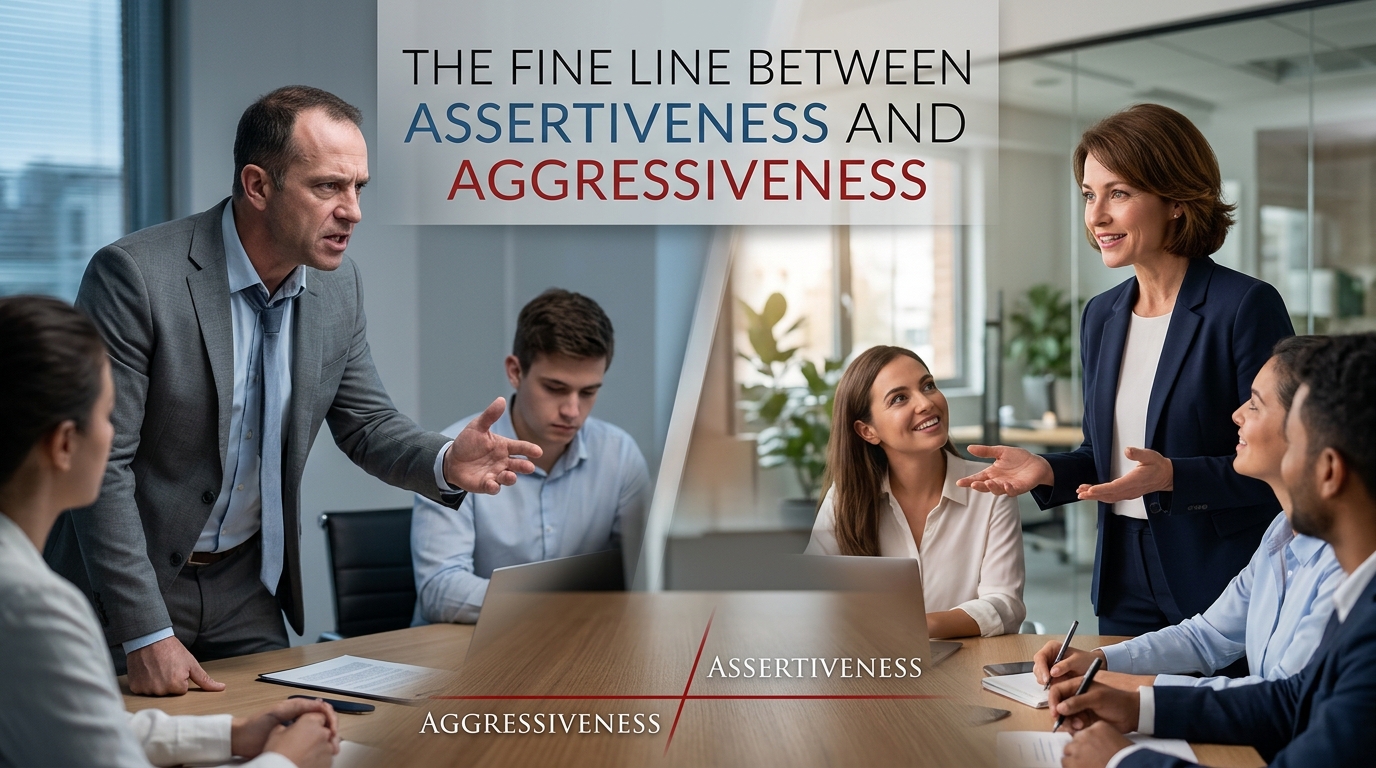
A few years ago, I observed two managers face the exact same problem.
A project was behind schedule. The client was unhappy. Tensions were running high.
The first manager walked into the meeting room determined to “take charge.”
“We are done discussing this,” he said. “This delay is unacceptable. I need everyone working overtime until it’s fixed.”
Nobody challenged him. Nobody asked questions. Nobody offered ideas.
The room fell silent.
The second manager faced the same situation the following day with a different team.
She began with a firm statement:
“We have a serious issue, and we need to address it quickly. Let’s focus on solutions. I want to hear what’s causing the delays and what support you need to get us back on track.”
The result was completely different.
People spoke openly. Problems surfaced. Solutions emerged. The project recovered.
Both managers were direct.
Both managers were confident.
Both managers wanted results.
Yet one was perceived as aggressive, while the other was seen as assertive.
That difference matters more than many leaders realize.
Why People Confuse the Two
From a distance, assertiveness and aggressiveness can look remarkably similar.
Both involve confidence.
Both involve speaking up.
Both involve defending a position.
Both involve taking action.
The difference lies not in whether you express yourself, but in how you express yourself.
Assertiveness says:
“I respect myself, and I respect you.”
Aggressiveness says:
“I respect my position more than I respect yours.”
The former creates engagement.
The latter creates compliance, resistance, or resentment.
The Hidden Cost of Aggressiveness
Aggressive people often achieve short-term results.
Deadlines get met.
Decisions get made.
People move faster.
At least initially.
But there is usually a hidden cost.
When employees feel intimidated, they stop sharing concerns.
When team members fear criticism, they stop offering ideas.
When people expect confrontation, they avoid difficult conversations altogether.
The leader may believe they are promoting accountability.
In reality, they may be suppressing honesty.
And in knowledge-based workplaces, silence is expensive.
What Assertiveness Looks Like in Practice
Assertive professionals communicate expectations clearly without attacking people.
They can say:
- “I disagree with this approach.”
- “We need a different solution.”
- “That deadline is unrealistic.”
- “I need this completed by Friday.”
- “Let me finish my point.”
Notice what is absent.
No insults.
No threats.
No intimidation.
No unnecessary escalation.
Assertiveness focuses on the issue.
Aggressiveness focuses on winning.
The Leadership Test
One of the simplest tests is to examine what happens after you leave the room.
Do people feel motivated to contribute?
Or relieved that the conversation is over?
Do they feel heard?
Or merely instructed?
Do they leave with clarity?
Or with frustration?
True leadership is not measured by how loudly people agree with you in a meeting.
It is measured by how willingly they engage with you afterward.
The Most Effective Leaders Do Both
The strongest leaders are not passive.
They are not people-pleasers.
They do not avoid difficult conversations.
They are willing to challenge poor performance, push for results, and hold people accountable.
But they do it without diminishing others.
They combine clarity with respect.
Confidence with humility.
Strength with self-control.
That combination is powerful.
Because people rarely remember how forcefully you delivered your message.
They remember how you made them feel while delivering it.
Final Thought
The line between assertiveness and aggressiveness is often just a few words, a tone of voice, or a moment of self-control.
Assertiveness earns trust.
Aggressiveness demands compliance.
One builds influence.
The other merely exercises authority.
And in today’s workplace, influence will always travel farther than authority.
Where do you think that line exists? Have you ever worked with someone who was highly assertive without being aggressive? Share your experience in the comments.
#Leadership #CommunicationSkills #EmotionalIntelligence #LeadershipDevelopment #WorkplaceCulture